Why PEMF Therapy Belongs in Your Practice: A Clinical Investment Worth Making
If you are a holistic practitioner, whether you work in functional medicine, chiropractic, naturopathy, acupuncture, massage therapy, or integrative wellness, you are already operating from a foundational truth that conventional medicine has been slow to embrace: the body heals itself when given the right conditions.
Demand for PEMF and cellular recovery services is exploding.
PEMF therapy is one of the most powerful tools available today for creating those conditions, and the practitioners who have integrated it are seeing measurable differences in patient outcomes, treatment retention, and practice growth.
This is not a new discovery. Over 2,000 university clinical studies have been conducted on PEMF therapy. It has been used in clinical settings for decades. The FDA has cleared PEMF devices for specific applications, including non-union fracture healing. What is new is the accessibility of clinical-grade technology, and the growing recognition among practitioners that it functions as a force multiplier for everything else they do.
It's no longer an emerging modality. It's a standard of care. And without the right equipment, your practice is sending those clients, and their recurring revenue, somewhere else.
What PEMF Is (and Why It Fits Naturally into Holistic Practice)
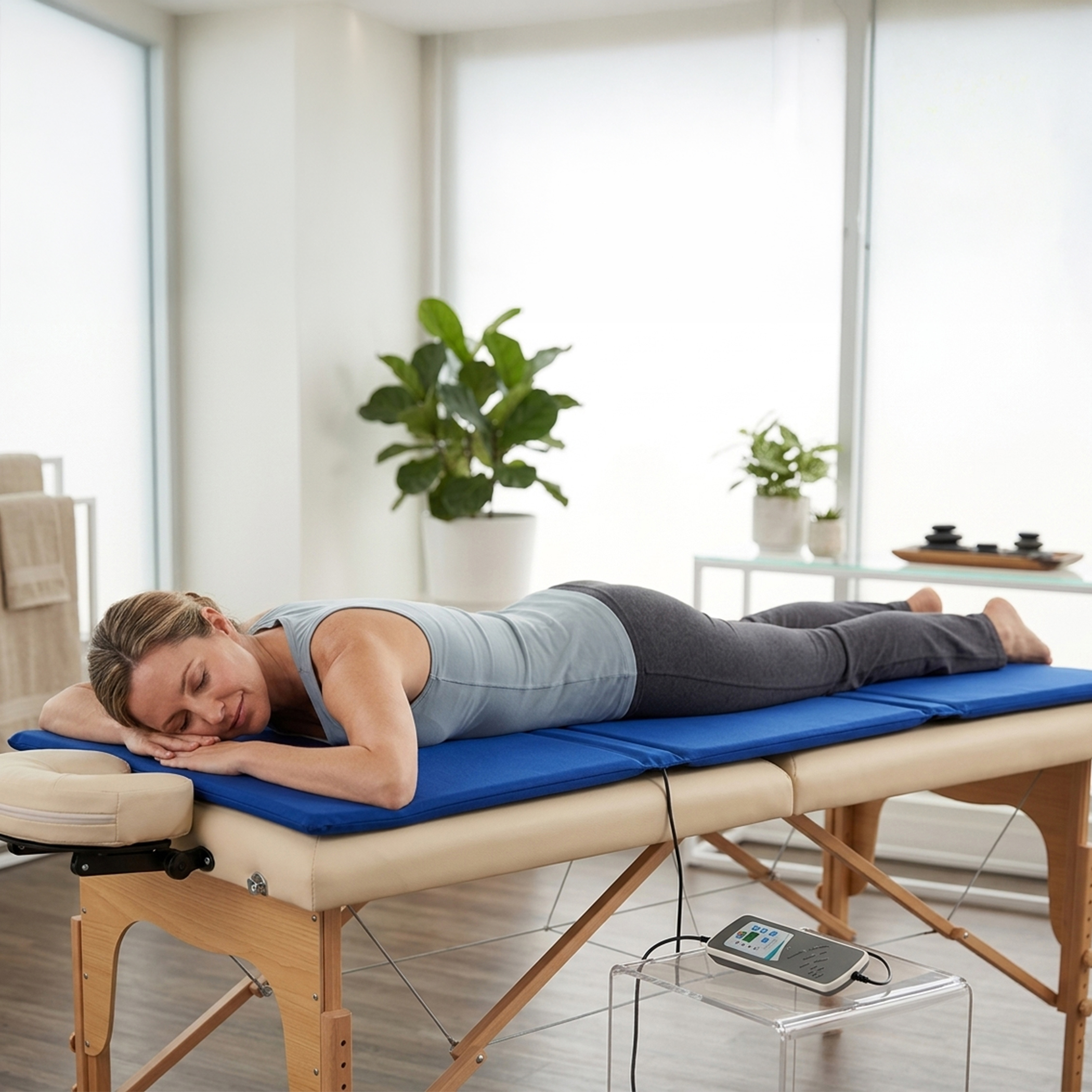
PEMF stands for Pulsed Electromagnetic Field therapy. It delivers low-frequency electromagnetic pulses through a mat or pad that patients lie on during a 20- to 30-minute session. No needles. No pharmaceuticals. No invasive procedures. No recovery time.
The mechanism is elegantly aligned with a principle holistic practitioners already understand: the body is bioelectric. Every cell maintains a voltage across its membrane. That charge is what powers nutrient absorption, waste elimination, cellular repair, and intercellular communication. When cellular voltage drops, due to aging, chronic stress, inflammation, injury, or illness, cellular function degrades across the board.
PEMF therapy restores that charge. Passing pulsed electromagnetic fields through the body re-energizes depleted cell membranes and re-establishes the electrochemical environment in which healing happens naturally.
The Clinical Case: What PEMF Addresses
The breadth of documented applications makes PEMF unusual among wellness modalities. Because it works at the cellular level rather than targeting a specific tissue or system, its effects span multiple areas that matter deeply to your patients.
Pain and inflammation are among the most well-established applications. Multiple peer-reviewed studies demonstrate PEMF's capacity to reduce inflammatory markers and interrupt pain signaling, making it directly relevant for patients presenting with chronic musculoskeletal pain, joint conditions, neuropathic pain, and post-surgical recovery. For practitioners already using manual therapy, nutritional interventions, or acupuncture for pain, PEMF addresses the underlying cellular environment in which those treatments are working.
Tissue repair and recovery have been studied extensively in the context of bone healing, soft tissue injury, and post-surgical outcomes. The accelerated healing observed in research translates clinically to patients who are not progressing as expected and athletes or active patients who need to return to function faster.
Nervous system regulation is particularly relevant for the integrative practitioners whose caseloads include patients stuck in chronic sympathetic activation, the stress-pain-inflammation loop that underlies so much of what presents in holistic practice. PEMF at lower frequencies (1–10 Hz) has been shown to support parasympathetic tone, improve sleep quality, and reduce the physiological footprint of chronic stress. For patients who "can't relax," who sleep poorly, or whose nervous systems are too dysregulated to respond well to other treatments, PEMF offers a non-invasive entry point.
Sleep, fatigue, and cognitive function respond to the same neurological mechanisms. Patients reporting brain fog, low energy, and disrupted sleep, a presentation many holistic practitioners see daily, often experience meaningful improvement as cellular energy is restored.
Immune function and circulation round out the picture. PEMF supports the delivery of oxygen and nutrients throughout the body and has been associated with improved cellular communication that underpins immune response. For practitioners running anti-inflammatory or detoxification protocols, these effects are directly synergistic.
The Amplifier Effect: Why PEMF Makes Your Existing Treatments Work Better
Here is the clinical insight that practitioners who integrate PEMF consistently report: it does not just add another modality to their menu. It improves the effectiveness of everything else they do.
When cellular voltage is suboptimal, the body's capacity to respond to intervention is diminished. Supplements are poorly absorbed. Manual therapy adjustments don't hold. Acupuncture effects fade faster. Patients plateau. By restoring cellular charge before or alongside your existing treatments, PEMF creates a more receptive physiological environment.
Think of it this way: if your patient's cells are running on 40% charge, your best treatment produces a fraction of its potential effect. PEMF charges the battery first. Then your treatments land in a body that is ready to integrate them.
This is not theoretical. Practitioners integrating PEMF routinely observe that patients hold adjustments longer, respond to nutritional protocols more quickly, and achieve outcomes that had previously stalled. For complex, chronic cases, the patients who have been struggling for years and are not making the progress either of you would like, PEMF often becomes the missing variable.
The Patient Experience: Simple, Safe, and Immediately Acceptable
One of the practical advantages of PEMF for a holistic practice is how easy it is for patients to receive. The session requires no preparation, undressing, or active participation. The patient lies on the mat, fully clothed. The device runs a selected program. Most patients experience a mild sensation of warmth, relaxation, or simply fall asleep. After 20 to 30 minutes, the session ends, and the patient resumes their day.
There is no discomfort, no downtime, and no side effects for most patients. Contraindications are few: implanted electronic devices such as pacemakers, pregnancy, and a small number of specific circumstances that your clinical intake process will screen for. For nearly everyone else, PEMF is appropriate, comfortable, and easy to recommend.
This matters for practice adoption. Modalities that require significant patient buy-in, cause discomfort, or disrupt their lifestyle can face retention challenges. PEMF sessions tend to become something patients look forward to. That is a meaningful asset for treatment adherence and patient retention.
Frequency Matters: Not All PEMF Devices Are Equal
Clinical literacy about PEMF means understanding that the frequency range determines the physiological effect. This is the critical variable that separates clinical-grade devices from consumer-grade options.
Different frequency ranges produce different outcomes: low frequencies around 1–10 Hz support nervous system regulation and sleep; mid-range frequencies of 10–50 Hz address pain, inflammation, and tissue repair; higher frequencies support circulation and cellular energy. A clinical-grade device offers a broad programmable frequency range, allowing you to tailor the protocol to the individual patient's presenting needs at each session.
Basic consumer PEMF devices typically operate in a narrow frequency band and lack the power output of clinical-grade equipment. When evaluating equipment for your practice, the breadth of the programmable frequency range and the quality of the electromagnetic field generated are the variables that matter most.
The Practice Investment Perspective
Adding PEMF to your practice is a capital investment, and it is worth thinking through the return clearly.
Clinical-grade PEMF equipment can be used with multiple patients per day, requiring minimal practitioner time once integrated into your workflow. Sessions can be scheduled alongside other treatments or offered as standalone appointments. Many practices bill PEMF sessions as a separate service, creating a new revenue stream. Patients who respond well, and many will, often add PEMF sessions to their existing care plans rather than replacing other treatments, increasing visit frequency and average revenue per patient.
Beyond revenue, there is the clinical value. Modalities that consistently improve patient outcomes improve retention, referrals, and practice reputation. In a field where patients are often frustrated by a lack of progress, being the practitioner who finally moves the needle has a compounding effect on your practice's growth.
For practitioners who want to offer PEMF to patients for home use between sessions, clinical-grade equipment is now available at consumer-accessible price points. Supporting patients in maintaining their cellular health between visits extends the impact of your care and deepens the patient relationship.
A Natural Fit for Integrative Practice
PEMF therapy does not ask you to change your philosophy or your existing treatment approach. It asks you to consider that one reason some patients respond less fully than expected may be foundational: their cells simply lack the charge they need to heal effectively.
The practitioners who see the most consistent results with PEMF are those who frame it exactly that way: not as a miracle modality, but as the step that ensures every other intervention has the biological environment it needs to work.
If you are looking for a non-invasive, evidence-backed tool that your patients will tolerate easily, that works synergistically with your existing protocols, and that has the depth of clinical research to justify its inclusion in your practice, PEMF belongs on your shortlist.
The science behind PEMF is established. The patient experience is positive. The clinical case is compelling. The question is simply whether your patients, and your practice, can afford to leave it out.